Deck Builder · Dutchess County, NY
Old houses, new builds, one standard.
Dutchess County is my home county. We are based in Fishkill, and I build all over it: the historic village homes of Rhinebeck, the rolling lots around Pawling, the waterfront and hillside neighborhoods of Beacon, and the established and new-construction streets across Poughkeepsie. It is a mix unlike anywhere else I work, a two-hundred-year-old farmhouse on one street and a brand-new build on the next, and each one needs a different hand.
A lot of Dutchess sits on flatter, larger lots than Putnam or Westchester, which opens up bigger, lower decks and full outdoor rooms. But the soil here is no gift. Much of the county is silty clay and glacial till over shale, ground that holds water and heaves hard. The frost line runs to about forty-eight inches. Attaching a heavy modern deck to a historic home raises its own questions.
I am the Hudson Valley's premier Trex Platinum Pro Builder, a tier held by fewer than one percent of builders nationally, and I build to the same standard whether the house is from 1820 or last year.
Why concrete fails in Dutchess clay.
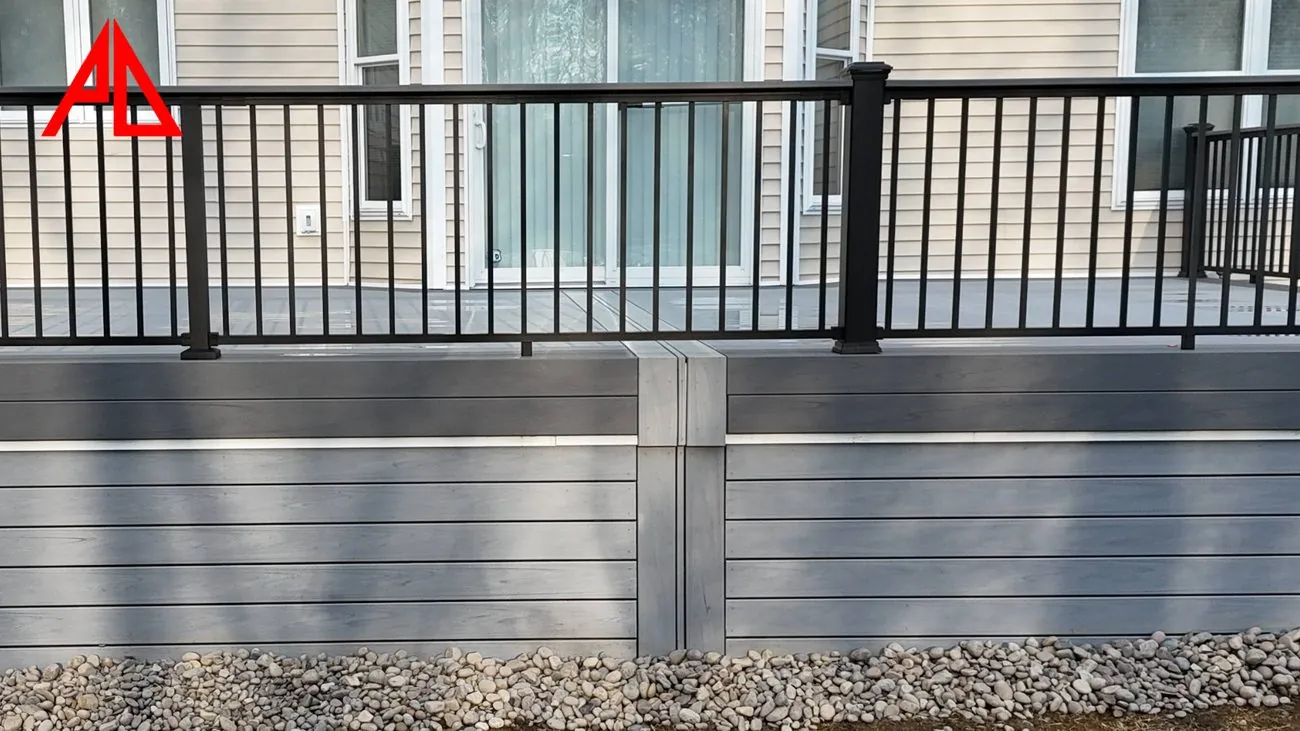
The silty clay soils common across Dutchess are some of the worst ground for concrete footings. Clay holds water like a sponge, and water that does not drain is water that freezes. When a footing sits in saturated clay above or even at the forty-eight-inch frost line, the freeze-thaw cycle lifts it season after season. On the larger flat lots people assume are easy, this is the quiet failure that shows up five winters later as a sagging corner and a deck that no longer drains away from the house.
Helical piles bypass the bad soil entirely. We turn each steel pile down through the clay and till until it reaches a verified torque value, which on most Dutchess lots means bearing into the dense till or shale well below the frost line and below the zone where clay moves. The torque reading gives me the real capacity of every pile as it installs, so I size each one to its actual load. A wide entertaining deck on a flat Pawling lot ends up just as stable as a tight river deck in Beacon.
On historic homes there is a second benefit: helical piles let me carry the deck's full load on its own foundation instead of relying on an old, sometimes fragile, house wall.
Typical Dutchess projects.
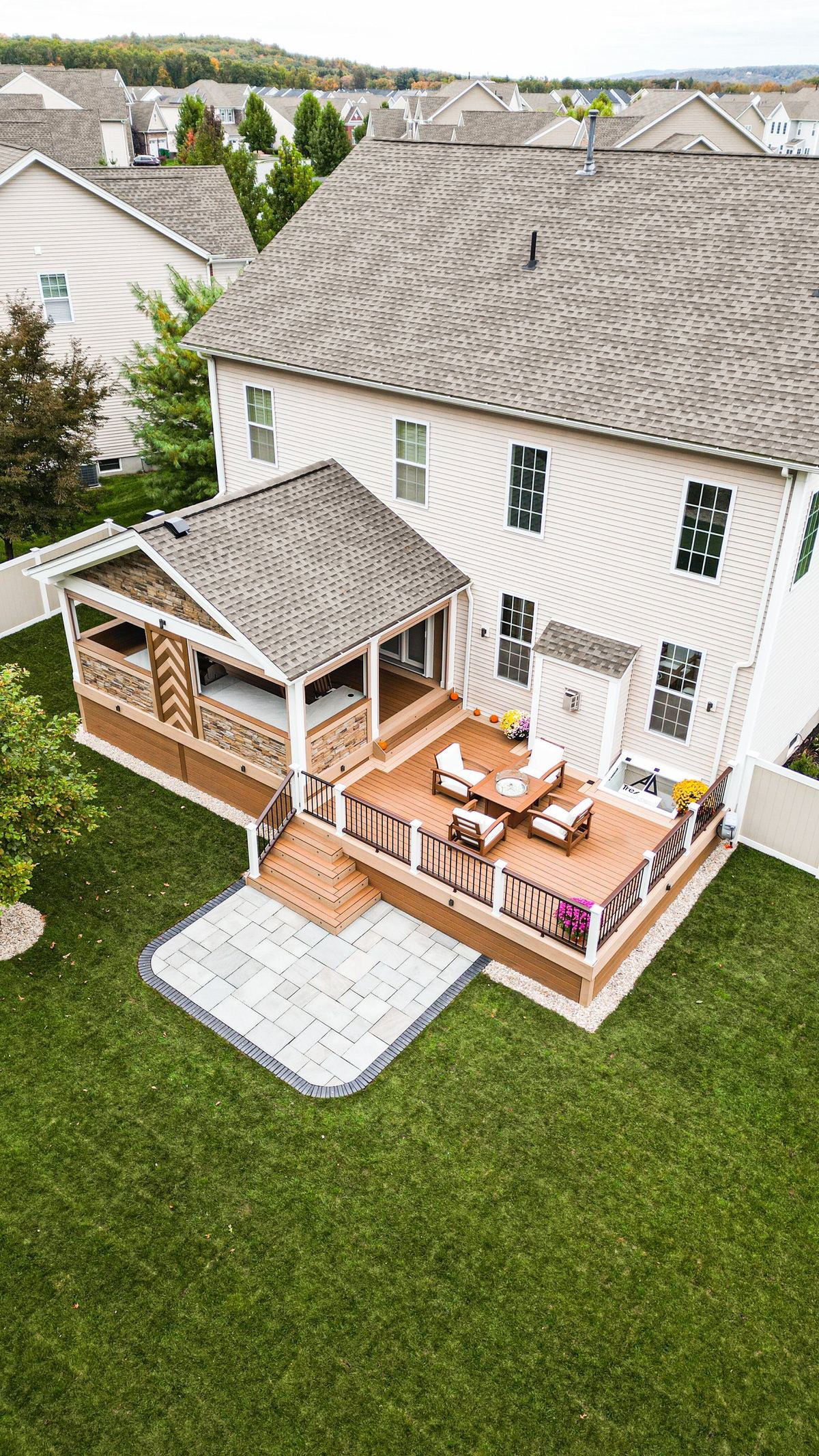
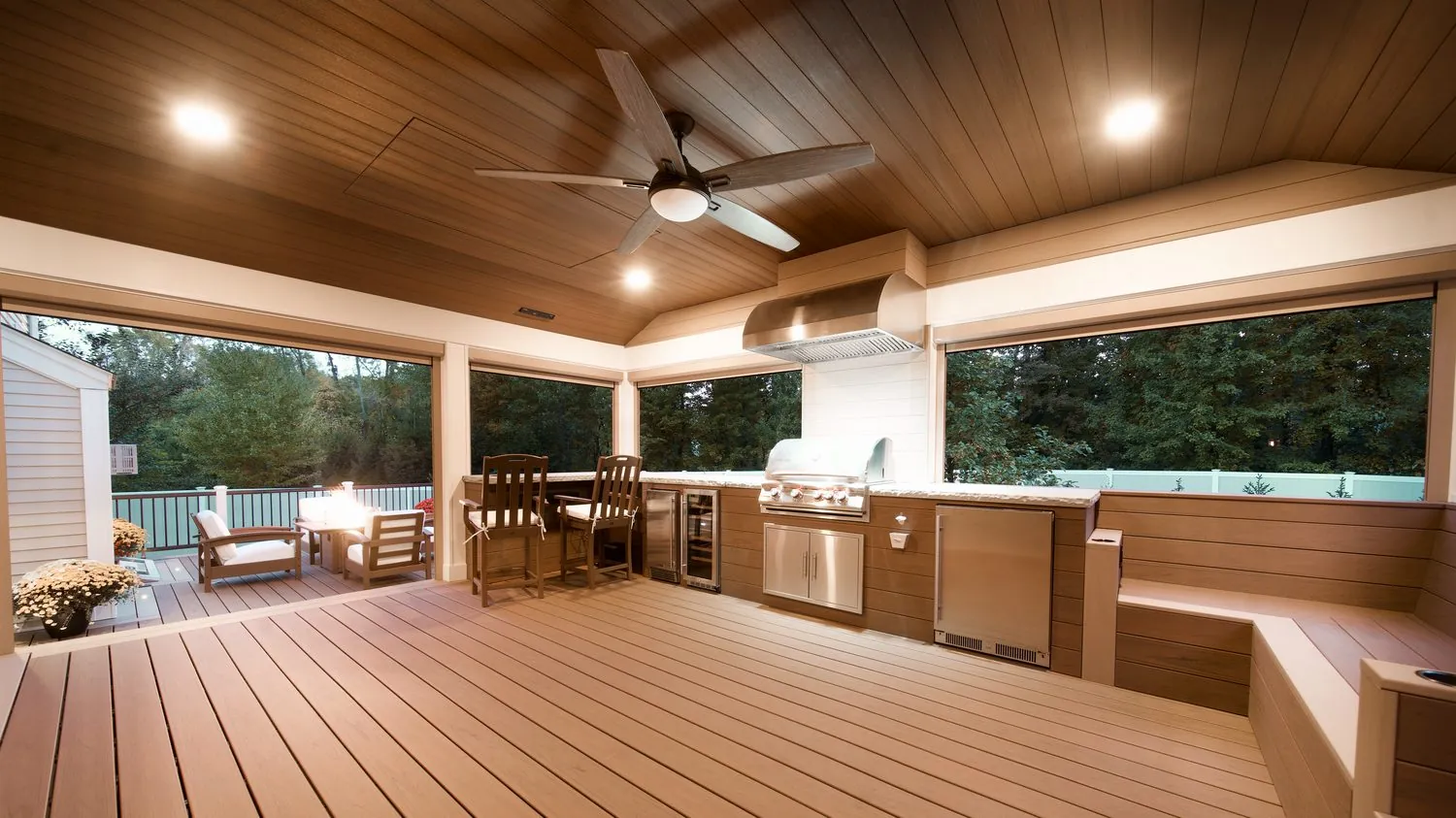
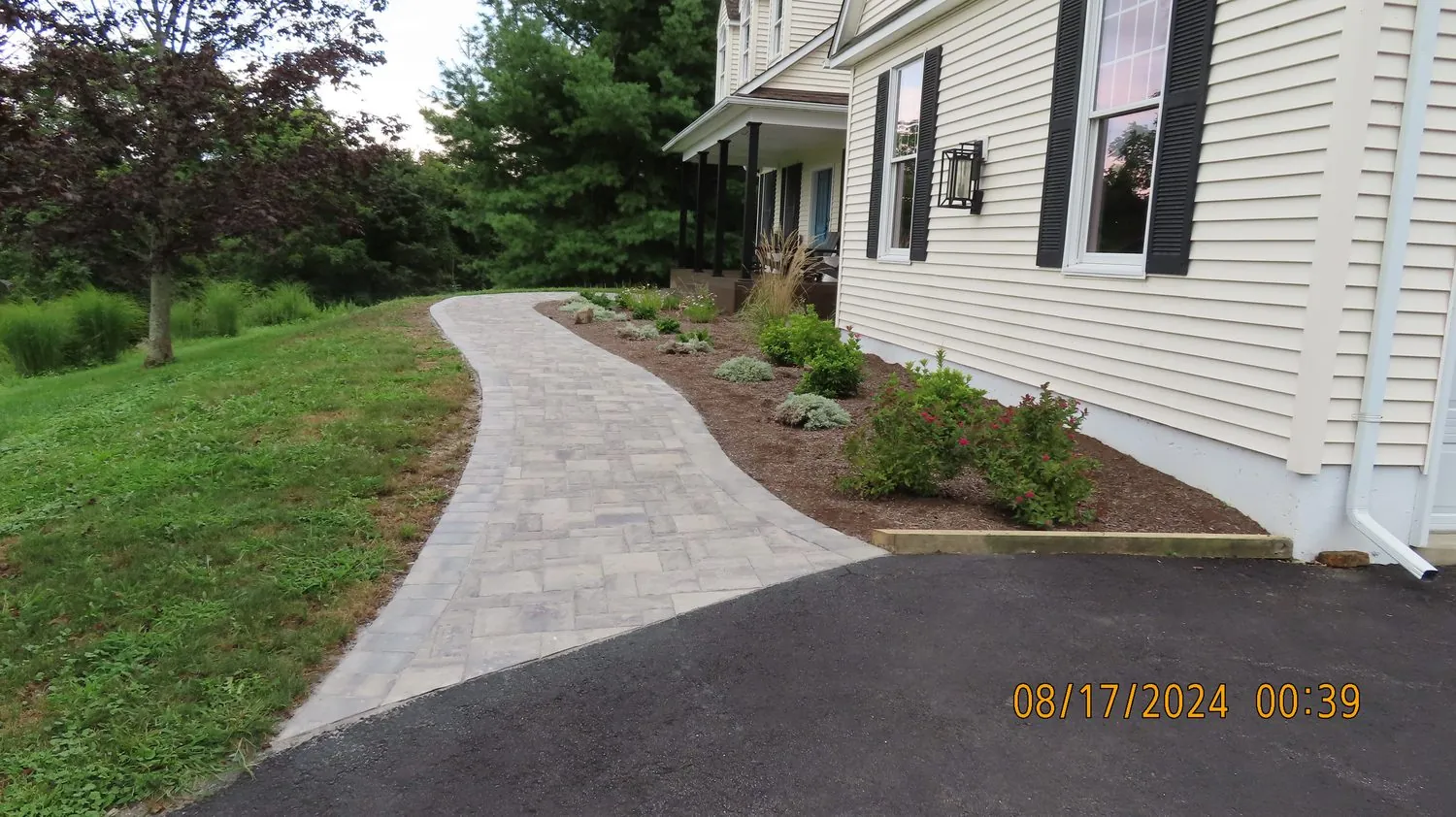
The bigger lots in Dutchess let me build out instead of up. In Rhinebeck and Pawling I do large ground-level and low-profile decks that flow into paver patios, outdoor kitchens, and fire features, the kind of full outdoor room you can use from spring through the fall foliage. On the historic homes I match railing profiles and proportions so a composite deck looks right against period architecture. In Beacon and Poughkeepsie I build a mix of river-facing decks and covered porches that add a dry, finished outdoor living space to both old houses and new construction.
Trex Signature and the full Lineage line.
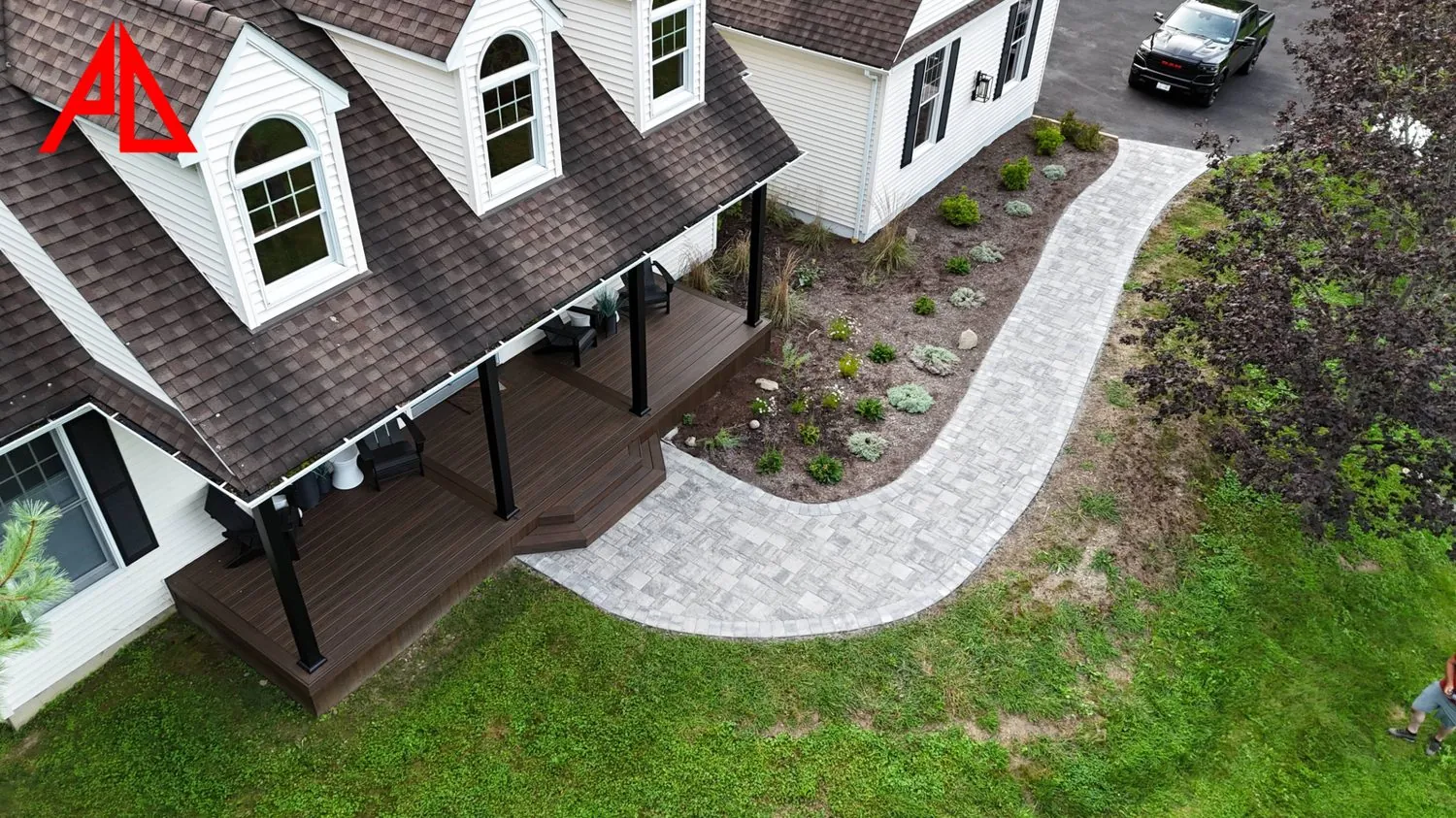
I build in Trex Signature, the top of the Trex range, and I offer the complete Trex Lineage collection. On a historic Rhinebeck home, Lineage gives me warm, natural-looking color tones that sit comfortably against old clapboard and stone. Signature brings the deepest grain for the large estate decks on the open lots in Pawling. Either way you get a board that will not gray, splinter, or need refinishing the way the wood deck on an old house always did.
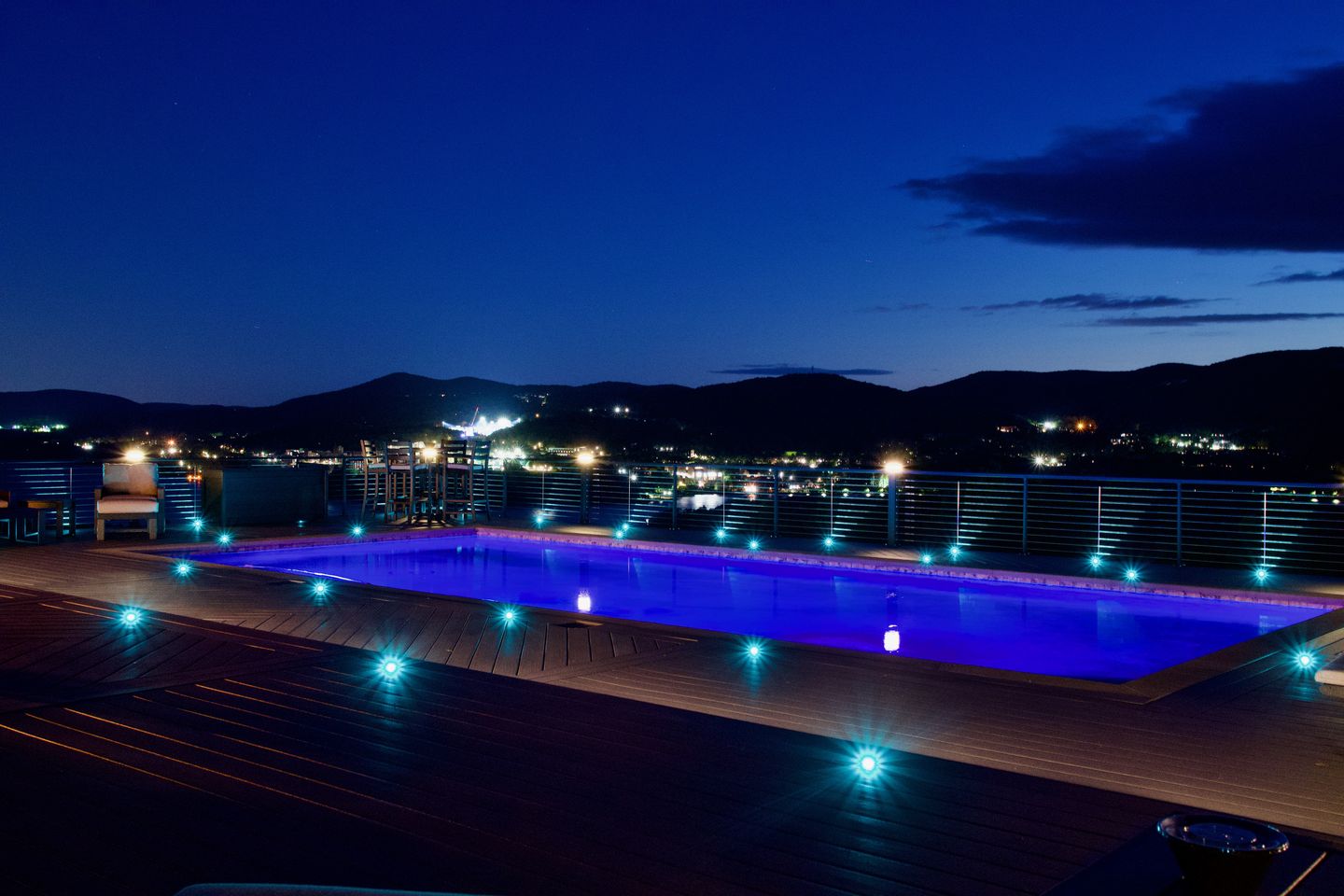
Every project gets Haven LED lighting built into the steps, posts, and railing during framing. On a big flat Dutchess deck that runs into a paver patio, the lighting ties the whole outdoor room together after dark and makes a wide space safe to move across without a single fixture stuck on as an afterthought.
Dutchess homeowners ask.
Can you build a modern deck on a historic Dutchess home?
Yes, and I do it often in Rhinebeck and Beacon. The key is treating the old house gently. Helical piles let me carry the deck on its own foundation rather than hanging heavy modern loads off a two-hundred-year-old wall that was never built for it. I also match railing proportions, post spacing, and color so a new composite deck reads as if it belongs with the period architecture instead of fighting it. You get a deck that performs like a new build and looks like it was always meant to be there.
Do I need a permit to build a deck in Rhinebeck or Beacon?
Yes. Rhinebeck, Beacon, Pawling, and the City of Poughkeepsie all require a building permit with sealed structural drawings for a deck, and the historic district reviews in Rhinebeck and parts of Beacon add another layer. I prepare and submit the complete package, including the engineering, the helical foundation plan, and any historic or waterfront reviews your property triggers. I have never had a permit denied. Engineering and permits are always part of the build, never a separate line item I tack on later.
My lot is flat and wet. Why does the deck still need special footings?
A flat lot fools a lot of homeowners into thinking the foundation is the easy part. It is the opposite. The silty clay that sits on many flat Dutchess lots holds water, and saturated soil heaves the hardest when it freezes. A concrete footing in that clay rises and falls every winter until the deck pitches and the boards no longer shed water. Helical piles drive straight through the wet clay to firm bearing below the frost line, so the deck does not care how much water the topsoil holds. On a wet flat lot, piles are not optional, they are the whole reason the deck stays put.
How big a deck can you build on a large Dutchess lot?
As big as the design calls for. The larger, flatter lots in Pawling and rural Dutchess are where I build full outdoor rooms: a wide entertaining deck flowing into a paver patio, an outdoor kitchen, and a fire feature, all on one connected level. Because each helical pile is sized to its own load by its torque reading, scaling up the deck is a matter of adding properly engineered support points, not stretching a foundation past what it can hold. I design the layout around how you actually use the yard, then build the structure to carry it for the long run.