Built Once.
Remembered Forever.
One firm builds
the whole thing.
I design and build the full outdoor living space as one project. The deck, the railing, the under-deck room, the kitchen, the fire feature, the pavers, and the lighting all get drawn together and built by one crew. There are no handoffs to a railing guy who has never seen the framing, and no electrician guessing where the lights go after the boards are already down.
This page is long on purpose. I would rather you read how I think about a deck than look at a price you cannot trust. Most of what goes wrong on a deck is invisible for the first few years. It shows up in winter five, when the frost has had enough cycles to find the shortcut someone took. Everything below is written for a Hudson Valley climate, where a deck freezes, thaws, soaks, and bakes every single year.
We are a Trex Pro Platinum builder and a premier installer in this region. You can verify us on Trex.com before you ever call. We source the bulk of our framing lumber, composite, and hardware through Messco Building Supply, which keeps the material chain short and the quality consistent.
Is engineering and a permit really included, or is that a line item later?
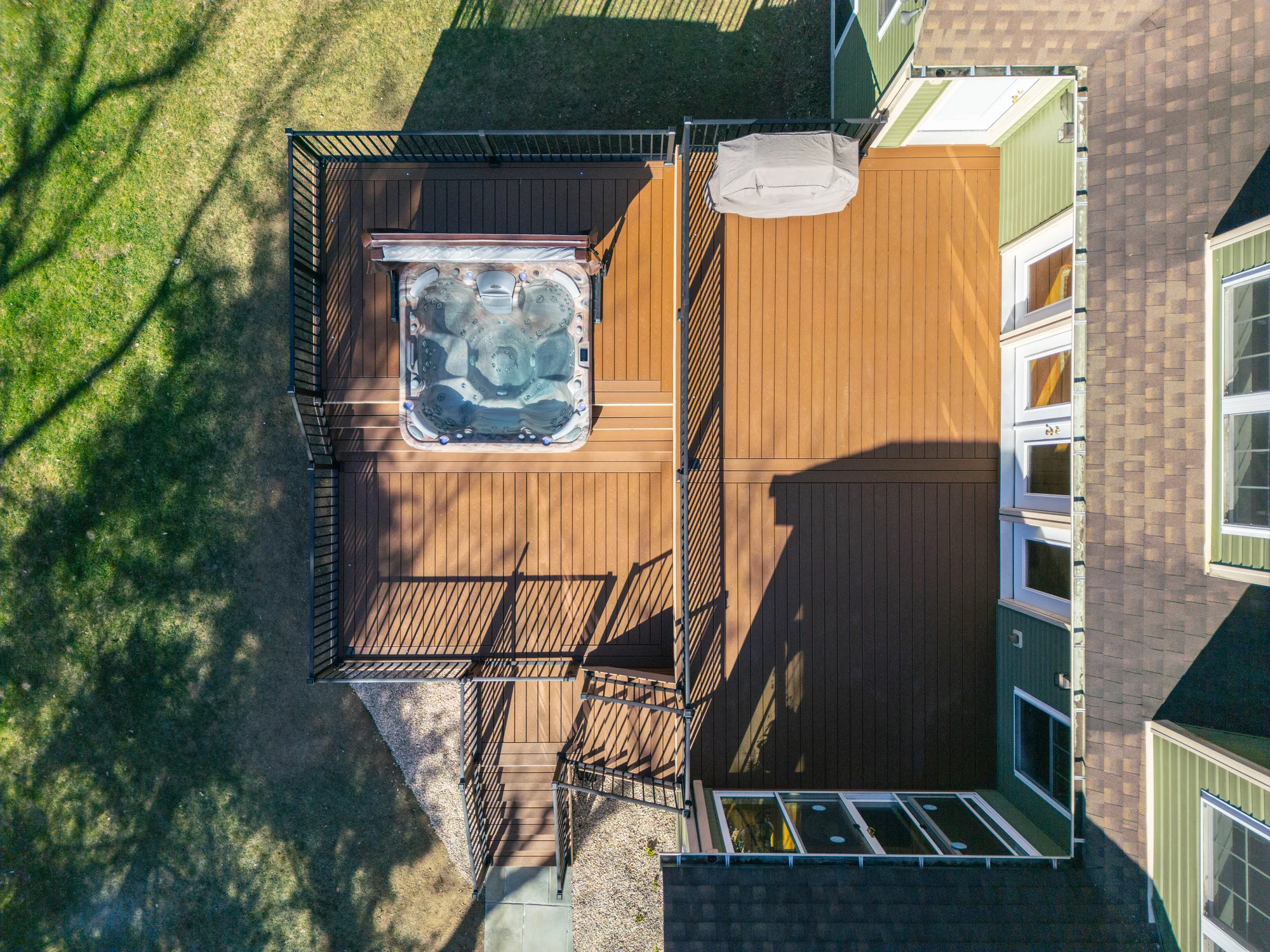
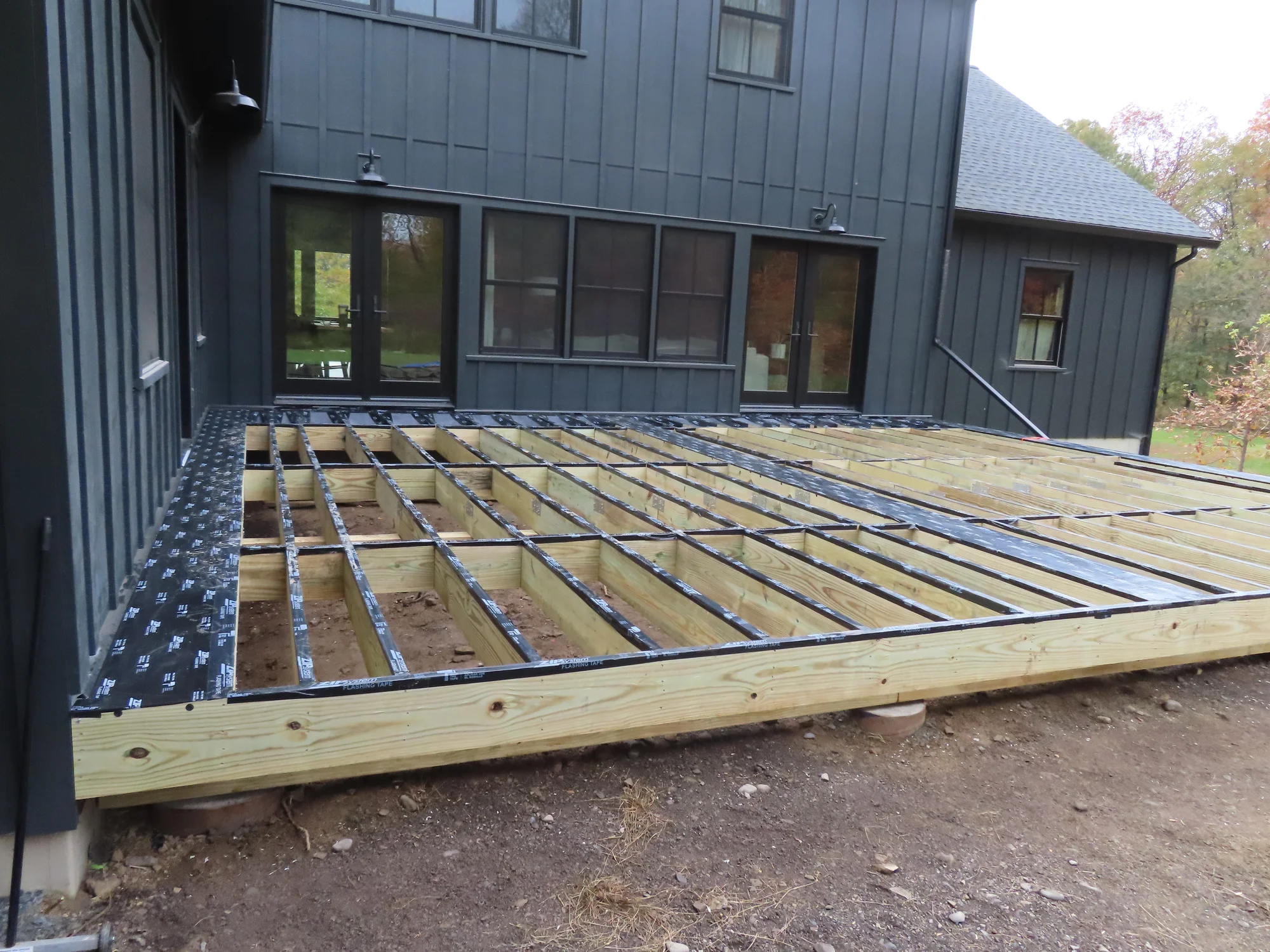
It is included, and it is never a line item. Every Pinnacle project starts with structural engineering and a permit set, not a brochure. I produce load calculations, helical pile or footing specifications, framing plans, and the permit documentation before a single board is ordered. That work is part of the build, and you will never see it broken out as an upcharge after you have signed.
I do it this way because the framing under a deck is the only part you cannot fix later without tearing the whole thing apart. The beautiful decking and railing you see are the easy 20 percent. The structure underneath is the 80 percent that decides whether your deck is solid in 15 years or bouncing and pulling away from the house. In the Hudson Valley the frost line runs deep, so footing depth and pile sizing are not guesses. They are calculated.
Your town building department signs off on a real stamped plan, not a sketch. When the inspector shows up, the deck matches the drawings, the ledger flashing is correct, and the joist hangers are the right ones nailed with the right fasteners. That is what an included permit actually buys you.
Composite or pressure-treated wood for a deck in the Hudson Valley?
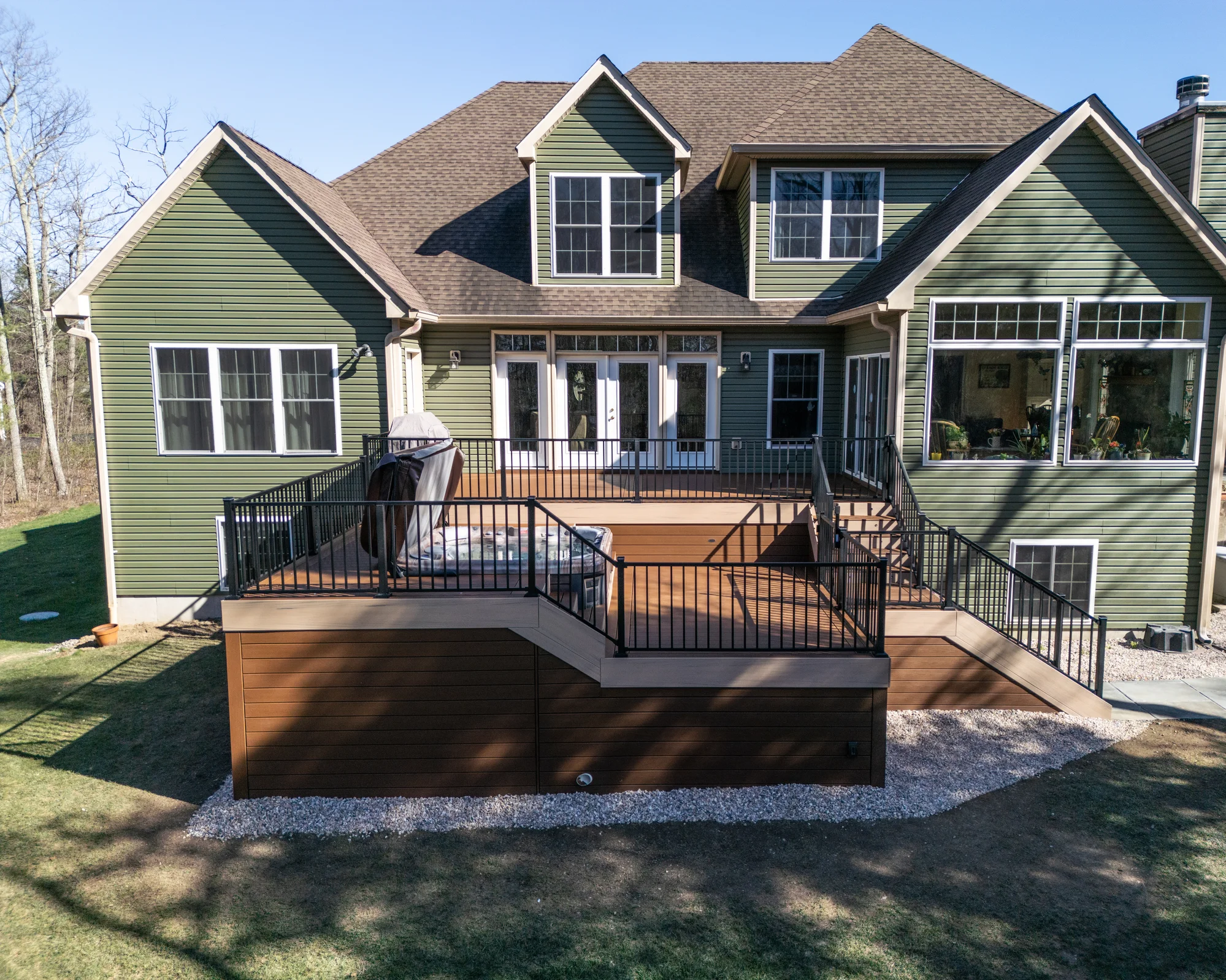
For the deck surface and railing, I build in composite, not pressure-treated pine. Pressure-treated wood is fine for the hidden framing, and that is exactly where I use it. But as a walking surface in this climate it is a maintenance treadmill. It checks and splinters, it cups when one side dries faster than the other, and it needs to be stripped and resealed every couple of years or it goes gray and rough. Our freeze-thaw cycles are brutal on a porous board that drinks water all winter.
Composite solves the water problem because the board does not drink. But not all composite is equal, and cheap composite is its own kind of regret. Bargain-tier boards from the big box stores often skip the capped polymer shell or use a thin one. After three Hudson Valley winters that thin cap fails. You get fade in the sun-baked sections, chalky white surface oxidation, and a fuzzy texture where the cap wore through to the wood-fill core. Once water reaches that core it swells and the board never lies flat again. The deck that looked great on day one looks tired by winter four.
That is why I install Trex, and only the lines I trust to survive here.
When do you use Trex Signature versus Transcend Lineage?
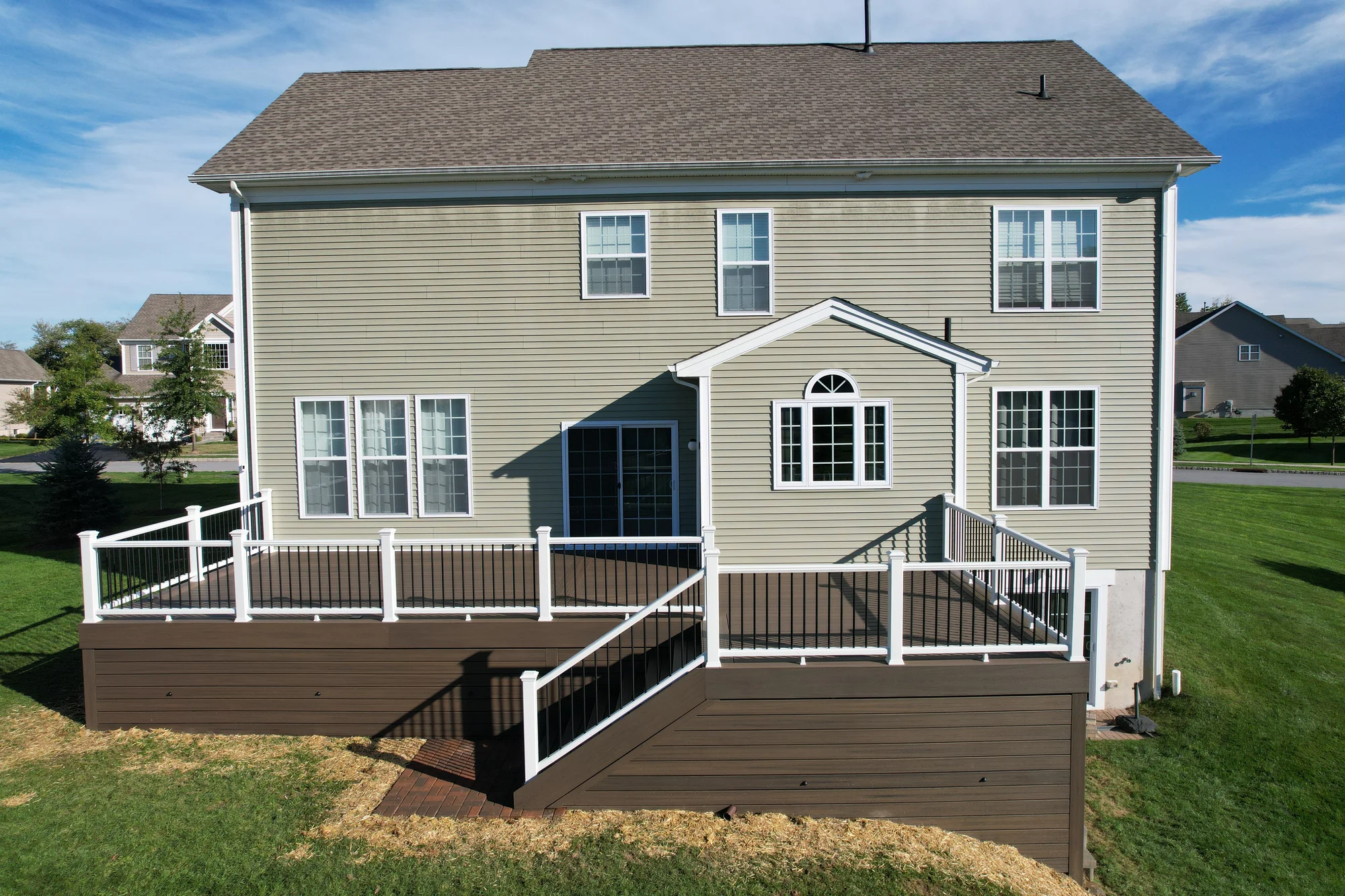
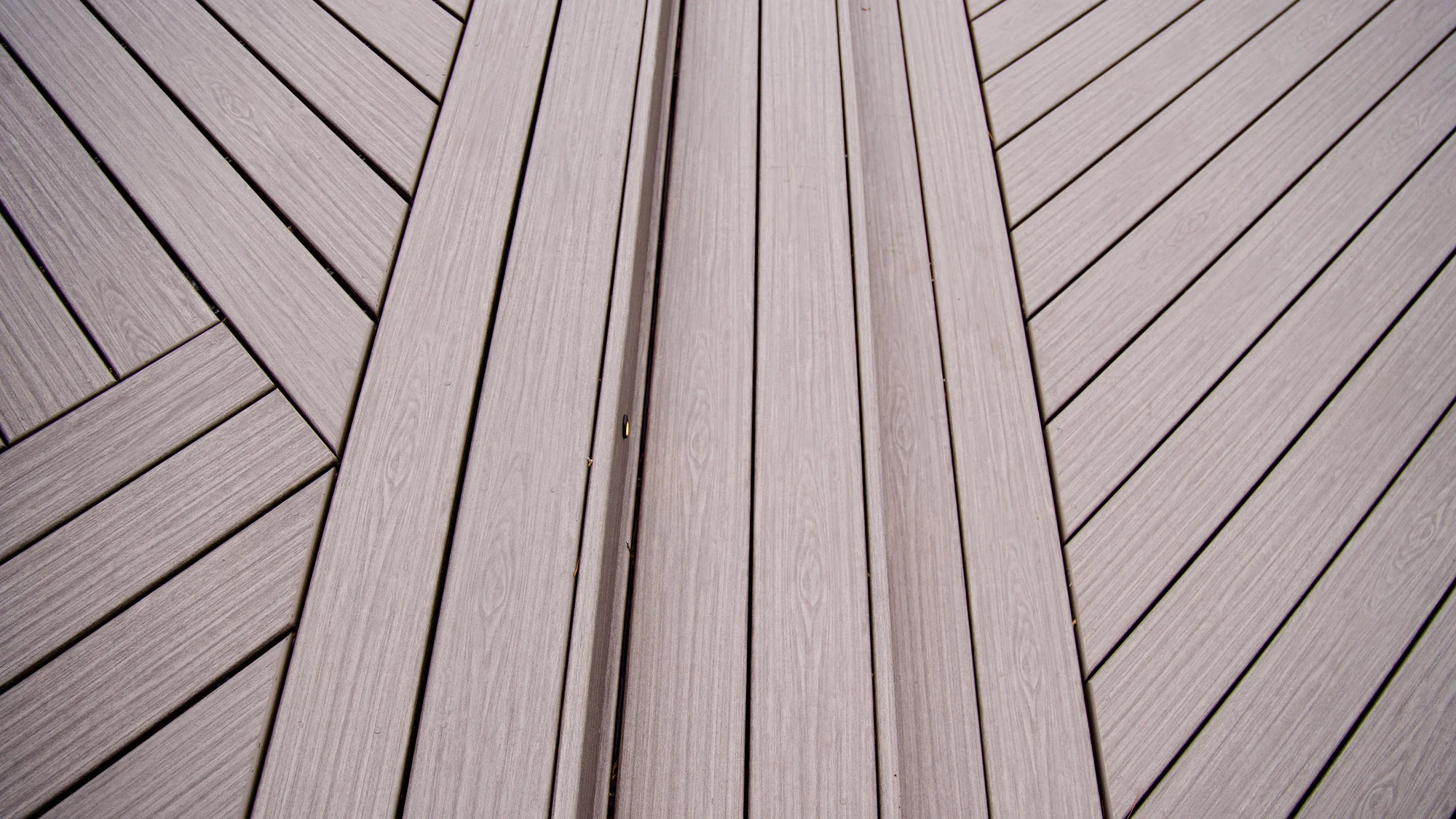
I install both. Trex Signature is the premier line, and I reach for it on the high-end builds where the surface is the centerpiece. Signature uses a denser board, a more refined grain, and a fully wrapped capped shell that holds color and shrugs off scratching better than anything else Trex makes. The Whidbey tone in particular is a warm, weathered gray-brown that looks like driftwood and ages beautifully on a river-view deck. When a homeowner wants the best surface available, Signature is the answer.
I also install the full Trex Transcend Lineage collection, all seven nature-inspired tones. Lineage runs slightly cooler underfoot thanks to its heat-mitigating technology, which matters on a south-facing pool deck where bare feet meet the boards in July. The seven tones give a homeowner real range, from the pale sandy looks to the deep warm browns, so the deck reads natural without the upkeep of real wood. Lineage is the right call when you want a gorgeous, durable surface with a broad palette and a touch less heat.
The short version: Signature for the flagship build where the deck surface is the star, Lineage when you want range, cooler boards, and seven honest wood-look tones. Both carry the Trex performance you are paying for. I help you pick during design, and I encourage you to order free Trex samples so you can hold the boards in your own light before you decide.
What about Trex Refuge PVC, and when is it the right call?
I also install Trex Refuge, which is Trex's first 100% cellular PVC decking. It carries a Class A flame spread rating and meets IWUIC and WUI fire-compliance code, which matters for a deck near a wooded edge or where local code is tightening on outdoor surfaces. Refuge comes with a wire-brushed grain and two colors, Martis Valley and Point Reyes, both quiet wood-look tones that age the way the material does, not the way paint does.
Where I reach for it: a deck on a wooded lot where the fire rating earns its keep, a coastal-feel project that wants the lighter weight and the open grain of PVC, or a homeowner who simply prefers a fully cellular board over a capped composite. PVC stays cooler underfoot than most composite, and because the whole board is the same material, there is no cap to wear through. It is the premier all-PVC option in the Trex lineup, installed to the same Pro Platinum spec as the composite lines.
Signature and Transcend Lineage cover most of my builds. Refuge is the right call when the property or the code asks for cellular PVC instead of capped composite. Hold a sample in your own daylight before you decide.
What does the Trex warranty actually cover, and why must railing and decking be spec'd together?
Trex backs its decking with a long fade-and-stain warranty that covers exactly what kills cheap composite: the surface fading badly, staining permanently, or the cap failing under normal use. That is a material warranty from Trex on the boards themselves. It is real, and it is one of the reasons I will not install off-brand composite that has no such backing.
There is a separate piece most homeowners never hear about. To unlock the 10-year labor warranty available through a Trex Pro Platinum builder, the decking and the railing generally need to be spec'd together as a coordinated Trex system installed to spec. Mix a Trex deck with a no-name railing and you can lose that labor coverage. So when I design your deck, I spec the railing in the same breath. It is not an upsell. It is how you keep the warranty whole.
The details that make a Trex deck look custom are the same ones that make it last. I run a picture frame border around the perimeter so there are no exposed cut ends. I wrap the sides in matching fascia so you never see framing or a raw rim joist. And I fasten the field with Cortex hidden fasteners, which plug the screw holes with a color-matched composite plug so the surface reads clean with no visible screws. No screws on top also means no rust streaks and no trip-line of fasteners working loose over the winters.
Hold the real boards before you commit. The Polywood Eastport Collection in Weathered Tweed is the furniture pairing I recommend with Trex Signature Whidbey, and the two tones together are worth seeing side by side in daylight.
Order Free Trex Samples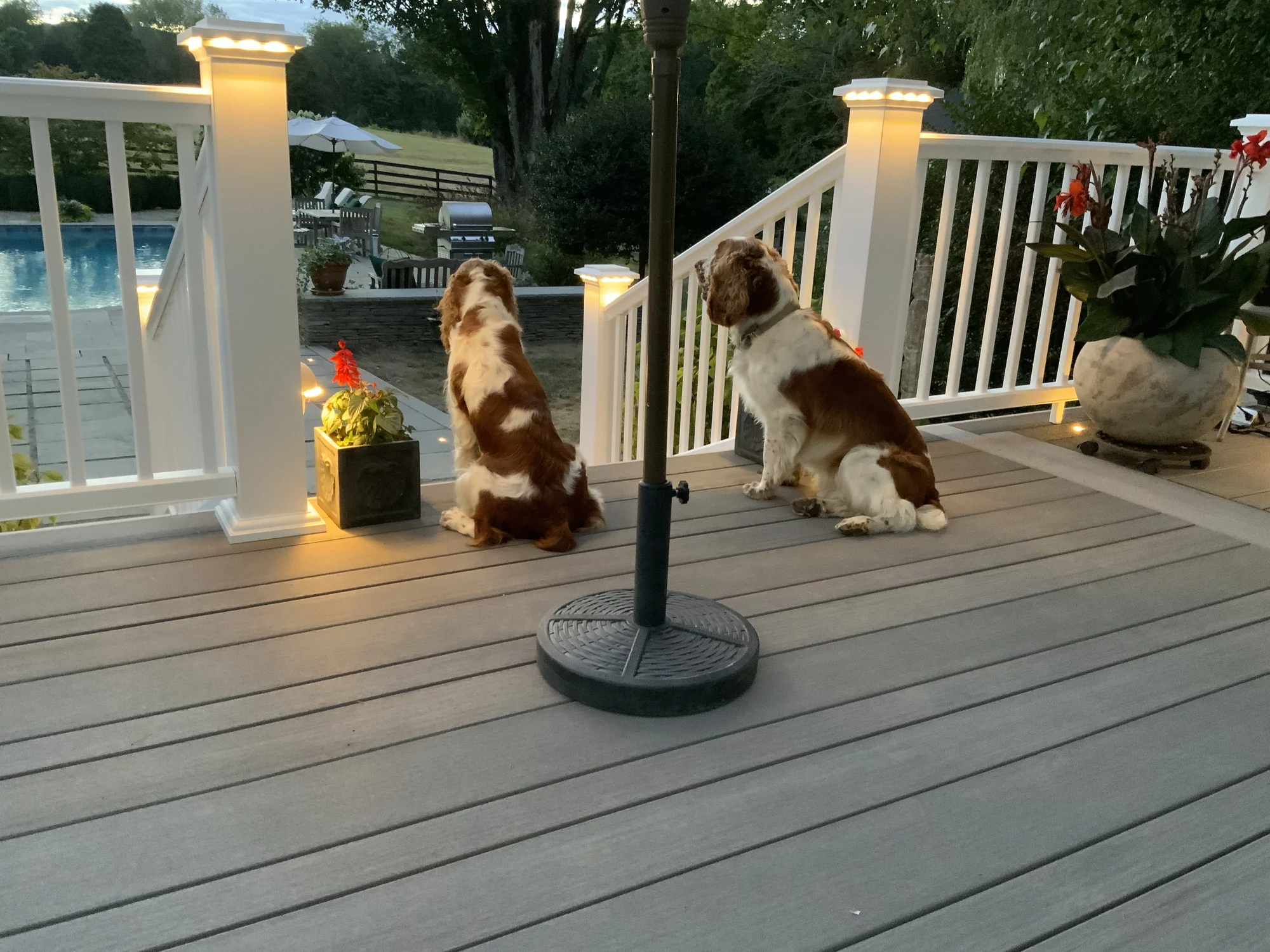
Which railing system is right for my deck, and is cable always the answer?
Cable is not always the answer, and any builder who pushes it on every deck is selling, not designing. The right railing depends on your view, your sightlines, your kids and pets, and which direction the deck faces. I install every system, so I have no reason to steer you toward one. Here is how I actually choose.
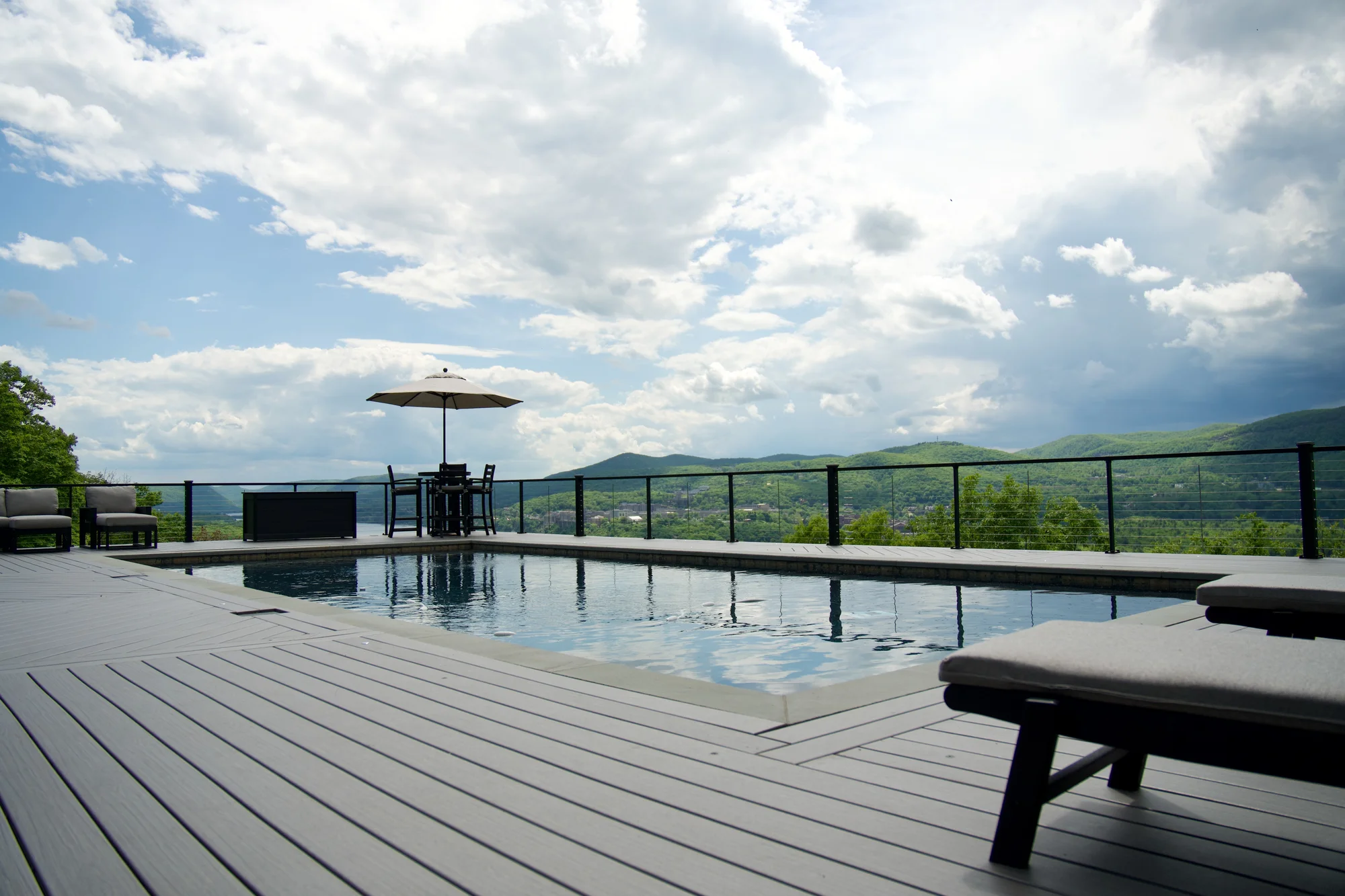
X-Series Cable is the system to use when the whole point of the deck is the view. Thin horizontal stainless cables almost disappear from a few feet back, so a Hudson River or ridgeline view stays open. Cable is right on an elevated deck with a real vista and adults who appreciate the clean look.
X-Series Frameless Glass is the most open of all. Tempered glass panels with no top rail give you a wind block on an exposed deck while keeping the view fully intact. It is the call for a pool deck or a windy hilltop where you want shelter without losing the scene. It does ask for the occasional cleaning, which is the trade you make for that clarity.
Signature Glass uses a framed aluminum top and bottom rail with glass infill. You get most of the openness of frameless with a more finished, architectural frame and easier panel handling. It is a strong choice on a covered porch or a deck where you want a defined edge.
Signature Rod runs horizontal stainless rods instead of cables. The rods are rigid, never need tensioning, and read crisp and modern. If you like the horizontal look of cable but want zero maintenance and no future re-tensioning, rod is the upgrade.
Signature Mesh uses a fine stainless mesh infill. It is the most pet-and-toddler-friendly of the open systems because nothing slips through, while still staying largely see-through. Families with small kids on an elevated deck usually land here.
Vertical Aluminum is the classic baluster look, powder-coated aluminum pickets that meet code with no fuss. It is the safe, timeless, lowest-maintenance pick, and it is the right answer on plenty of decks where the view is not the headline.
Cocktail Rail adds a wide flat drink rail along the top of the railing. It turns the perimeter into usable counter space for a glass, a plate, or a phone. On a deck built for entertaining, a cocktail rail along the view side is the detail people remember.
Why aluminum at all instead of wood or vinyl? Because in this climate aluminum simply outlasts both. Wood railing rots at the post bases, splits at the fasteners, and needs sealing forever. Vinyl gets brittle in our cold, yellows in the sun, and sags on long runs in the summer heat. Powder-coated aluminum does none of that. It does not rot, rust, or rot, and the finish is baked on, not painted, so it holds for decades.
Finish matters more than people expect, and it depends on which way the deck faces. On a hard south-facing deck that bakes all afternoon, I steer toward lighter and mid-tone powder coats, because a dark finish runs hotter to the touch and shows UV stress sooner. On a shaded north-facing deck that stays damp, I lean toward darker finishes that hide the inevitable pollen and water spotting, and I make sure drainage is right so the posts are never standing in moisture. Same railing, different finish, chosen for the wall of the house it lives on.
Can the space under my elevated deck become a dry, finished room?
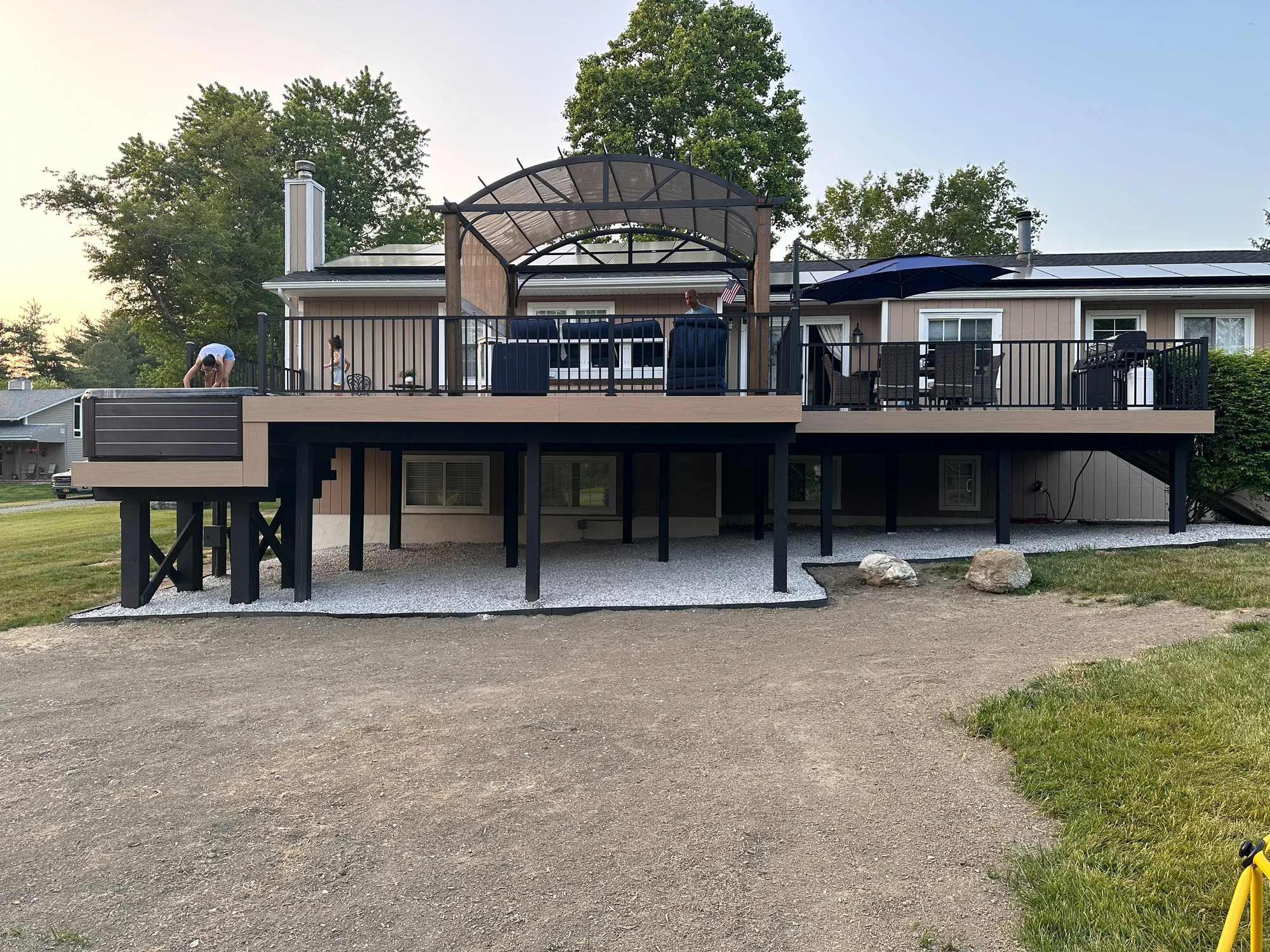
Yes, and it is one of the best upgrades on an elevated deck. The Trex RainEscape system is a network of troughs and tape installed on top of the joists, under the deck boards, before the surface goes down. It catches every drop of water that passes between the boards and channels it out through a gutter at the deck edge. The result is that the space below stays completely dry, even in a hard Hudson Valley rain.
A dry ceiling means the area under the deck stops being dead storage and becomes a real outdoor room. I finish it with a ceiling, run wiring for recessed lighting and a ceiling fan, and you get a covered patio that is protected from the deck above. Add a TV, a couch, or an outdoor dining set and you have effectively doubled the usable square footage of the deck for a fraction of what a second deck would cost.
The catch is that RainEscape has to go in during the build. It is installed on the joists before the deck boards. Trying to add under-deck drainage after the deck is finished means a lesser bolt-on ceiling system or pulling boards back up. So if there is any chance you want a finished room down there someday, we plan for RainEscape now, even if you finish the space later.
What does a finished under-deck room actually include?
A finished ceiling that hides the joists and the drainage troughs, recessed LED lighting on a dimmer, wiring stubbed for a ceiling fan, and outlets for a TV and lamps. The space stays shaded and dry, which in our summers makes it the coolest spot on the property in the afternoon.
Because the water is gone, the framing above stays dry too, which is good for the deck's lifespan. I treat the under-deck room as part of the original design, not an afterthought, so the lighting layout, the fan location, and the gutter line all get drawn before we frame.
What goes into a real outdoor kitchen and covered porch?
A real outdoor kitchen is built to live outside through a Hudson Valley winter, not a patio cart that rusts by year two. I build with stainless components rated for the outdoors, a built-in grill and burners, and counters in granite or quartz that handle heat, frost, and weather without staining. The cabinetry is masonry or marine-grade, never interior cabinet boxes that swell the first wet season.
A covered porch makes the kitchen usable in more than three months of the year. I frame a real roof, then finish the ceiling in cedar tongue-and-groove, which smells like cedar, ages to a warm tone, and shrugs off the moisture that would rot a painted ceiling. The cedar ceiling is the detail people fall in love with the moment they look up.
Under that roof I run lighting, fans, heaters if you want to push into the shoulder seasons, and the wiring for a TV. The covered porch and the kitchen get designed together so the cook is never standing in the rain and the seating is never in the smoke.
Will a paver patio and a pool deck survive our freeze-thaw winters?
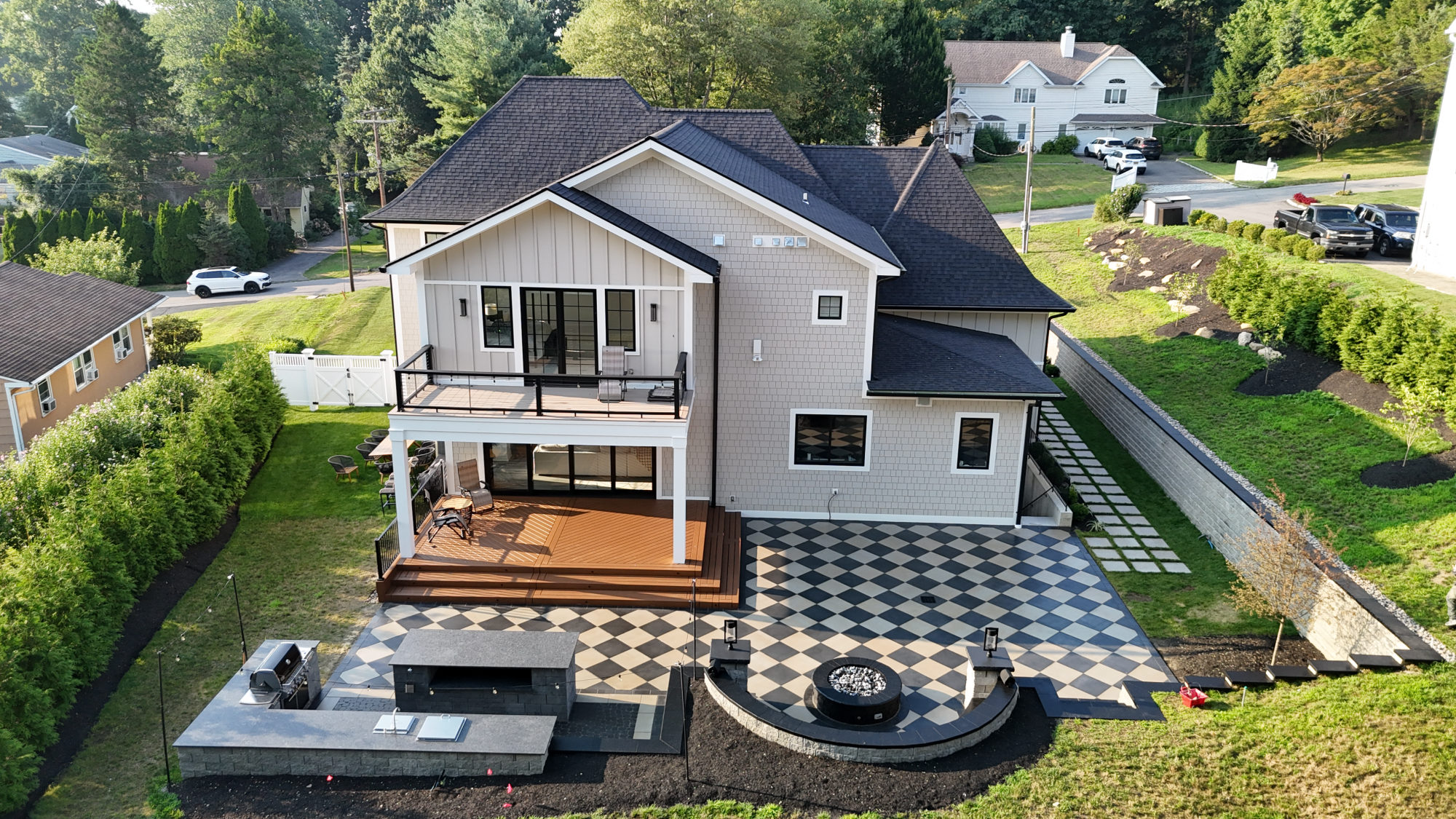
They will if the base is built right, and that is where most paver work fails. I install Unilock pavers, which are engineered for northern freeze-thaw and hold their color and surface where bargain pavers spall and flake. But the paver is only as good as what is under it. I build a deep, compacted, properly drained base so water moves away instead of freezing under the stones and heaving them. A heaved patio is almost always a base failure, not a paver failure.
Fire features anchor a patio. I build gas and wood fire pits and fire tables in Unilock stone, sized and placed so the seating wraps the fire and the smoke clears the porch. A fire feature is what keeps the patio in use from the first cool October night through the holidays.
Pool decks get their own attention. The surface has to be slip-aware when wet, cool enough for bare feet, and detailed so pool water drains off rather than pooling at the coping. I coordinate the deck, the paver pool surround, and the railing as one design so the transition from house to deck to pool reads as a single space.
How do you blend a wood-look deck with a stone patio and a pool?
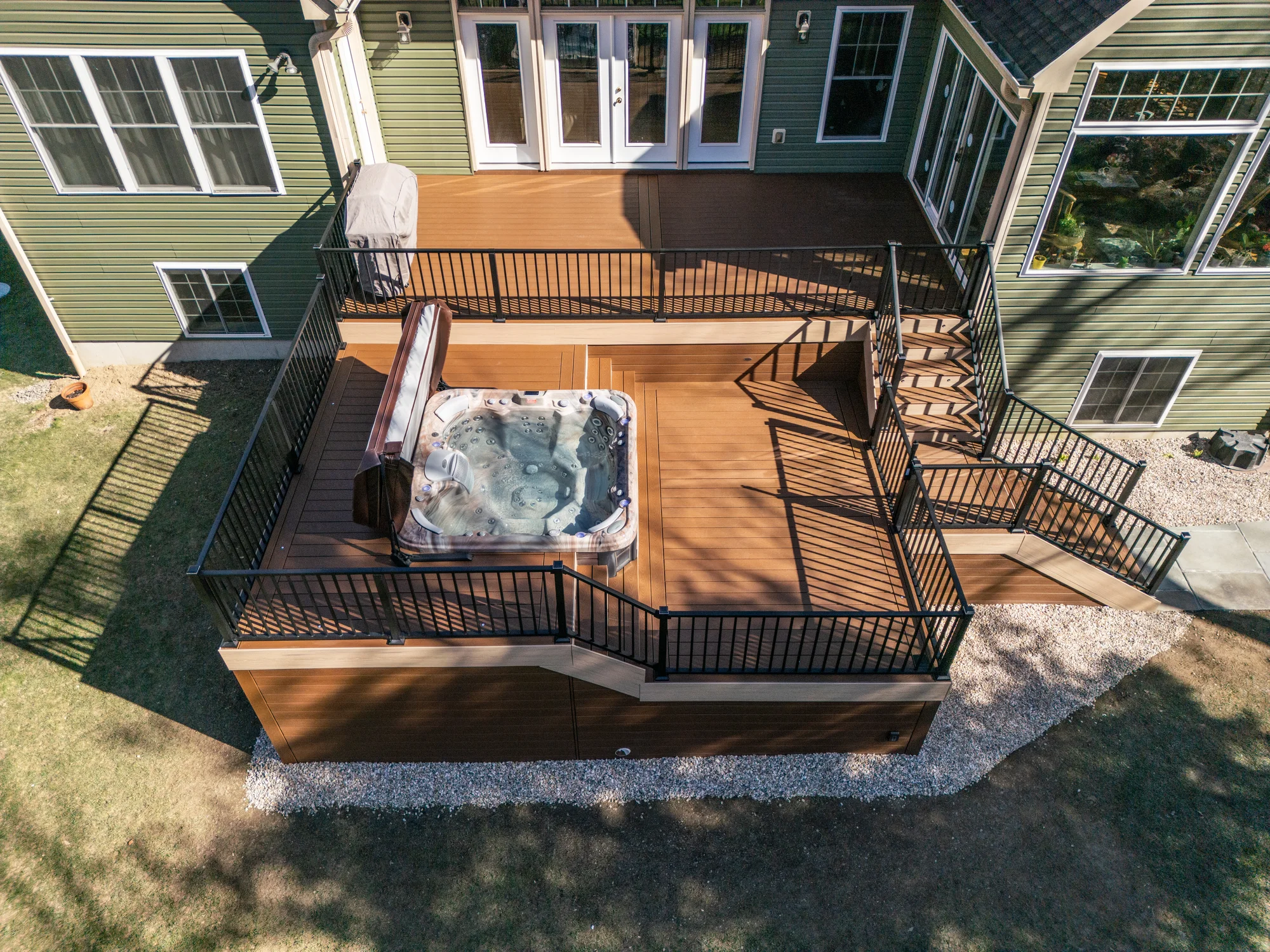
By designing them together from the first sketch. The composite tone, the paver color, the coping, and the railing finish all get chosen against each other so nothing fights. A spa or hot tub gets set on a reinforced pad with the structure rated for the loaded weight, the access panels reachable, and the lighting tuned for night use.
When the deck, the patio, the pool surround, and the fire feature come from one design, the property reads as one outdoor living space instead of three projects that happened to land near each other.
Why does deck lighting need to be designed before the boards go down?
Because the wiring lives inside the structure, and once the boards are down that structure is sealed. Haven full-color LED lighting gives you in-deck lights flush in the surface, riser lights washing each stair tread, post-cap lights glowing on the railing, and landscape zones reaching into the planting beds around the deck. Full color means you can run warm white for dinner, a soft amber for a quiet night, or a team color for a party, all from your phone.
All of that wiring has to be roughed in before the decking goes on. When I design lighting up front, the wire runs hide cleanly in the framing, the transformers are sized for the whole system, and every fixture lands exactly where it belongs. The light is even, the stairs are safe, and there is not a wire in sight.
When lighting is added as an afterthought, you get the telltale signs of a retrofit: surface-mounted wire chases, fixtures screwed wherever a wire could reach, voltage drop that leaves the far lights dim, and holes drilled through finished boards. It works, but it looks added-on because it was. I would rather plan it once and do it right than chase wires under a finished deck later.
What actually goes wrong on a deck, and how do you prevent it?
Most deck failures are not bad luck. They are shortcuts that stay hidden until the weather finds them. I will say these plainly, because you deserve to know what I am protecting you from.
Bad framing shows up in year five. Undersized joists, too few beams, and the wrong fasteners feel fine on day one. Then the wood moves through enough freeze-thaw cycles and the deck starts to bounce, the boards gap, and the structure racks. By the time you feel it, the only fix is rebuilding the structure. I engineer the framing up front so it is solid in 15 years, not just at the final inspection.
A ledger that is not properly flashed rots the house. The ledger is the board that bolts the deck to your house. If it is not flashed correctly, water runs behind it, into the rim joist, into the wall, and rots the house itself, not just the deck. This is the single most dangerous detail on a deck and the one most often done wrong. I flash every ledger to code, and the inspector sees it.
Undersized helical piles heave and settle. If the piles or footings are too small or not driven deep enough below the frost line, our winters lift them. The deck rises and falls unevenly, doors stop closing, and the railing goes out of level. I spec piles from the engineered load, not a rule of thumb.
Cheap composite fails after three winters. Thin-capped bargain boards fade, chalk, and go fuzzy, and once water reaches the core they swell. The deck that was supposed to be no-maintenance becomes an eyesore you cannot refinish. This is why I install Trex and spec the line to the build.
Most cable rail fails its first inspection. Cable railing has to hit a strict gap spacing and a real tension load so a child cannot push through it. Builders who do not pre-engineer the posts and the tensioning routinely fail the first inspection, then add posts or hardware that ruin the clean look that sold the railing. I design the post layout and tension to pass the first time, so the railing looks right and holds right.
None of this is exotic. It is just the difference between building a deck to sell and building a deck to last. I build them to last, and I would rather walk you through the boring structural details than hand you a low number that hides them.
Who do you build with, and how do I check your credentials?
I am a Trex Pro Platinum builder and a premier installer for this region, which is what unlocks the extended Trex labor warranty and gets you both the Signature and full Transcend Lineage lines installed to spec. You should never take a credential on faith, so go ahead and verify us on Trex.com directly.
My material chain runs through Messco Building Supply for framing lumber, composite, and hardware, which keeps quality consistent and lead times honest. For railing I install the full X-Series and Signature systems, for pavers I build in Unilock, and for furniture I recommend the Polywood Eastport Collection in Weathered Tweed alongside Trex Signature Whidbey, a pairing worth seeing in person.
Want to feel the boards before you decide anything? Order free Trex samples and hold Signature Whidbey and a Lineage tone in your own daylight. Then we talk.
Let's price
your project.
Tell me what you are picturing. I will come see the property, talk through materials and systems, and give you a real proposal scoped to your home. Engineering and permits are part of the build, never an upsell.
Price Your Project