Deck Builder · Orange County, NY
Built for Orange County land.
Orange County is the open side of the Hudson Valley. I build across it, from the black-dirt farm country and vineyards around Warwick and Goshen to the established neighborhoods of Middletown and the river towns under the Highlands at Cornwall. The land rolls here. One property sits on rich, deep farm soil, the next backs up to a rocky ridge, and the one after that drops toward a creek. There is no single soil type to design for, which is exactly why the foundation has to be matched to the site.
That variety is the whole story in Orange. Warwick's famous black dirt is soft, organic, and deep, terrible bearing for a footing. Up on the ridges near Cornwall you hit rock fast. In between you get clay, gravel, and old glacial till in any combination. The frost line runs to about forty-eight inches countywide. A foundation that works on one Orange lot can fail two miles away.
I am the Hudson Valley's premier Trex Platinum Pro Builder, a tier held by fewer than one percent of builders nationally, and I size every foundation to the ground it actually sits on.
Why concrete fails on Orange soil.
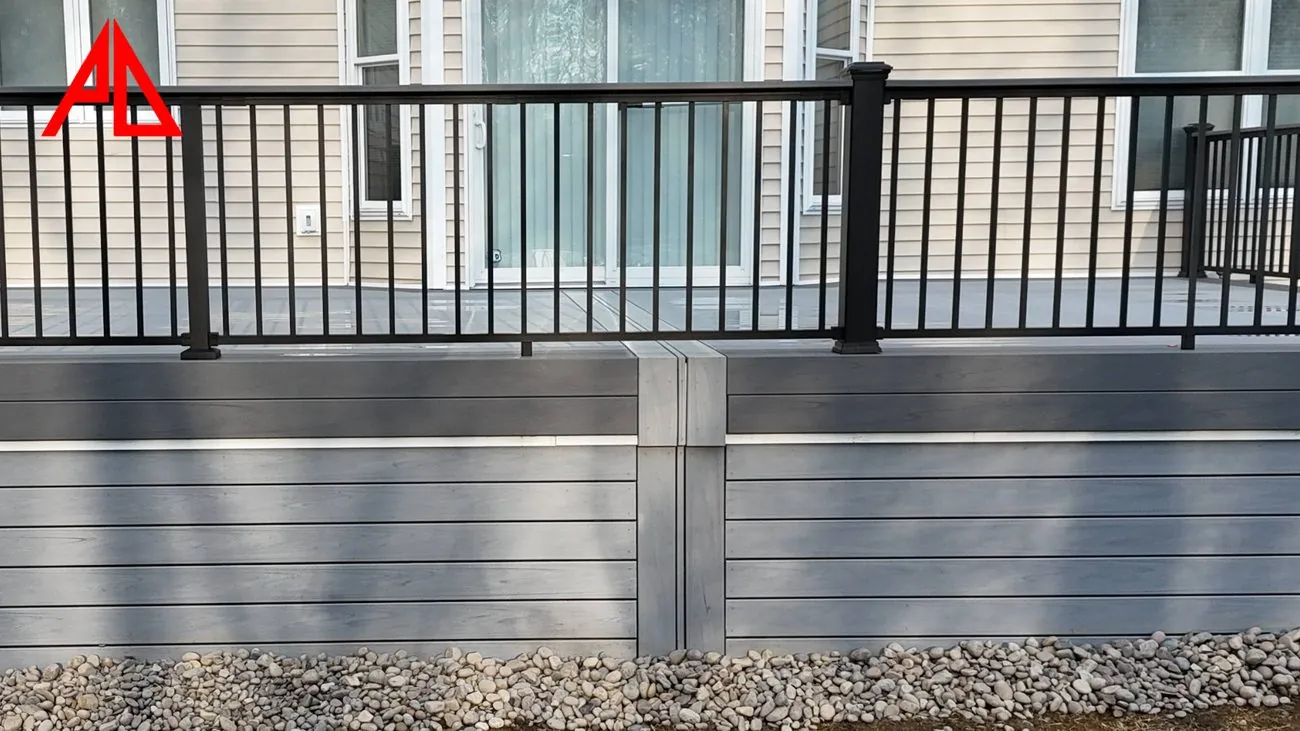
The thing that makes Orange County hard is that the soil changes within a single lot. A concrete footing only works if it sits on consistent, well-draining ground below the frost line, and Orange rarely gives you that twice in a row. In Warwick's black dirt and the low organic soils near the creeks, a footing has nothing solid to bear on and slowly sinks. On the rocky ridges near Cornwall the dig stops short of the frost line on ledge. In the clay and till between, water collects and heaves the footing every winter. One yard can have all three, so a row of concrete piers will settle unevenly and twist the deck no matter how carefully they are poured.
Helical piles are the answer to inconsistent ground. Each pile turns into the soil until it reaches a verified torque value, and that reading tells me the real capacity of that exact spot. In soft black dirt I drive deep until the pile finds firm bearing well below the organic layer. On a rocky ridge I bear it on competent rock. In clay I get below the frost line into dense till. Because every pile is sized to its own location, the whole deck sits level on ground that is anything but uniform.
No curing wait, no truck stuck in a muddy field, and no guessing about what is two feet down.
Typical Orange projects.
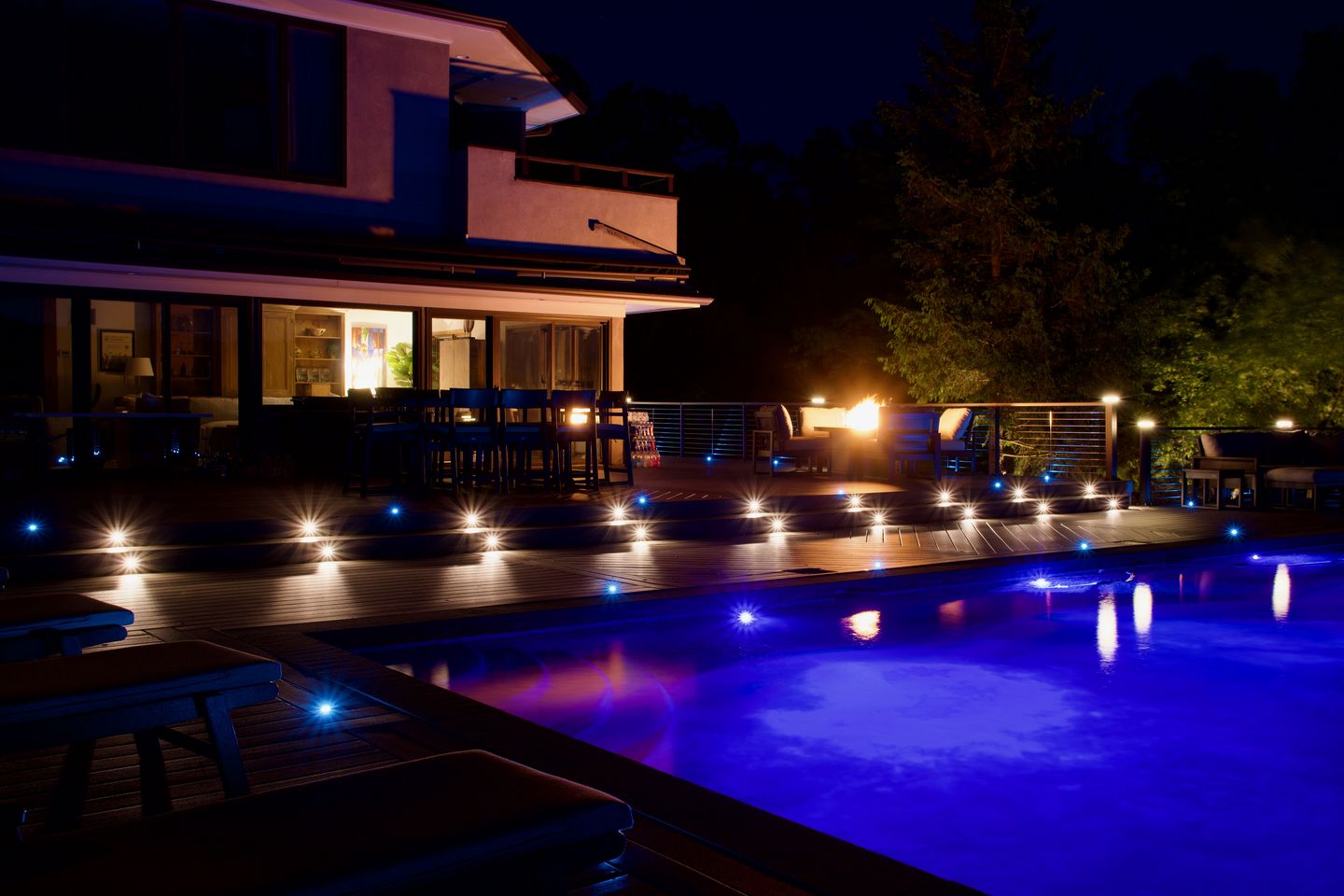
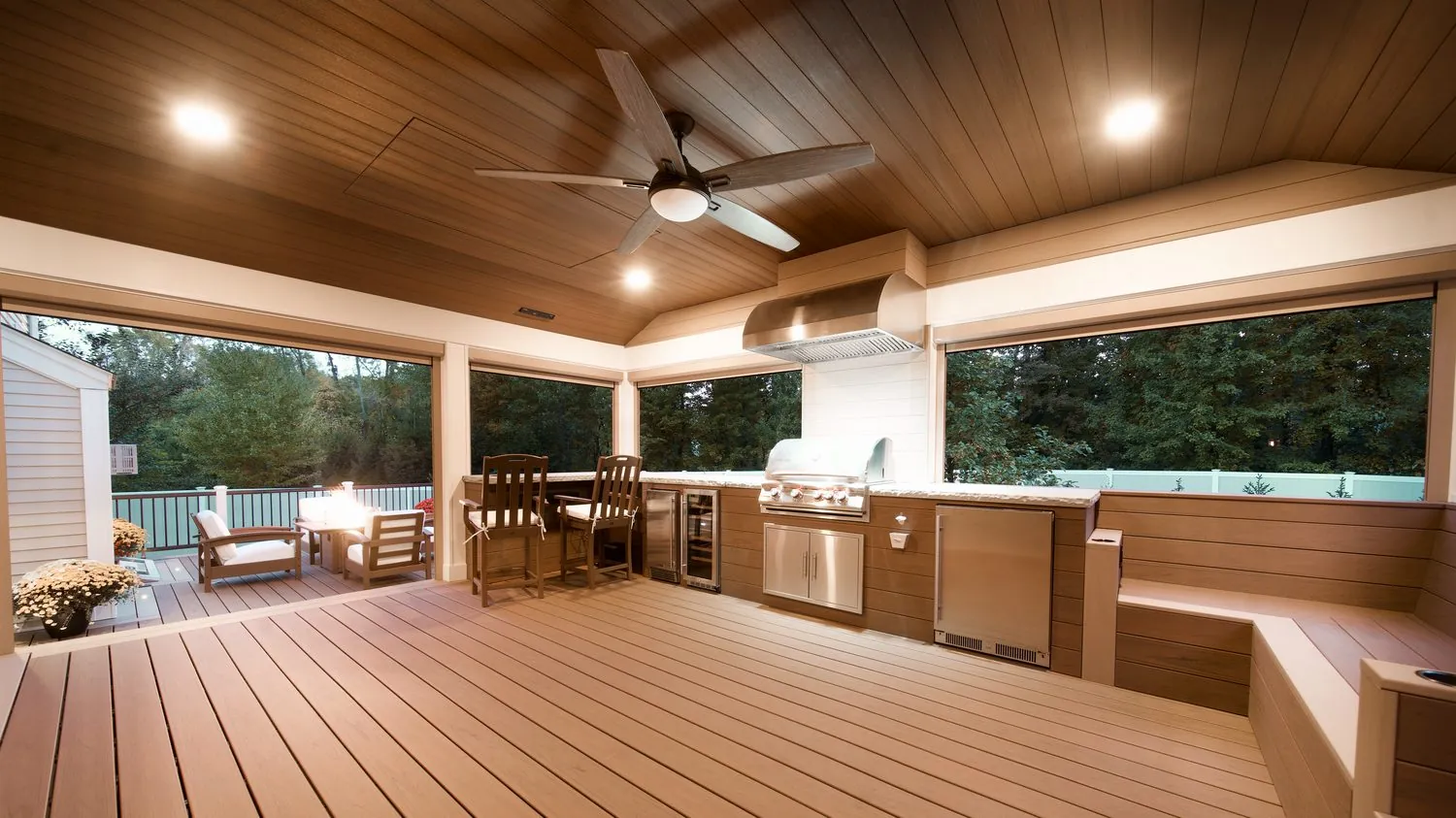
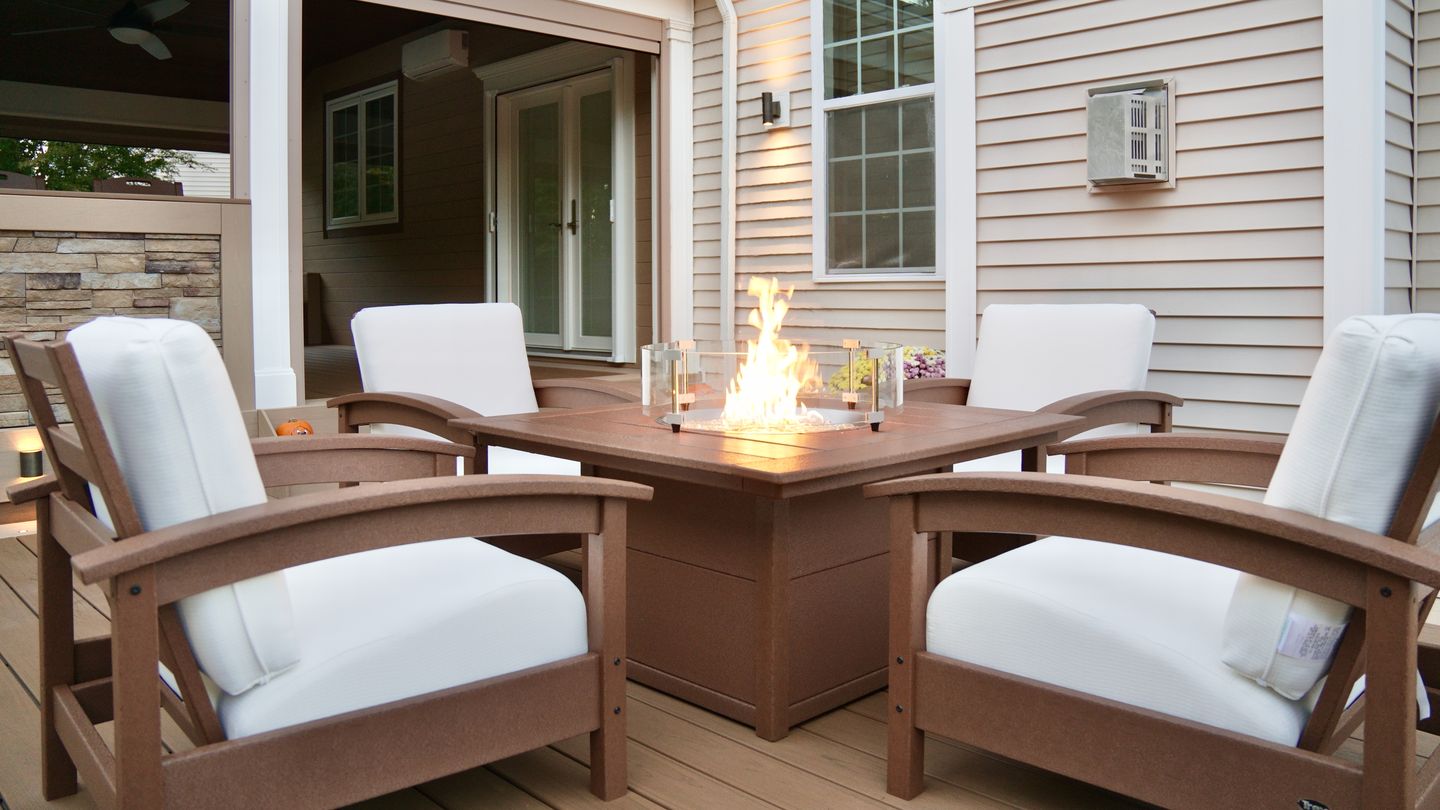
The rolling, open land in Orange is made for big outdoor living. In Warwick and Goshen I build large multi-level decks that capture the long farmland and ridge views, often with a pool surround, an outdoor kitchen, and a fire feature worked into the layout. In Middletown I do a lot of full-yard projects that connect a deck to a paver patio for families who want one continuous space to use. Near Cornwall and the Highlands edge I build elevated decks and covered porches that frame the mountain views. Wherever the lot rolls, I use levels to follow the grade instead of fighting it.
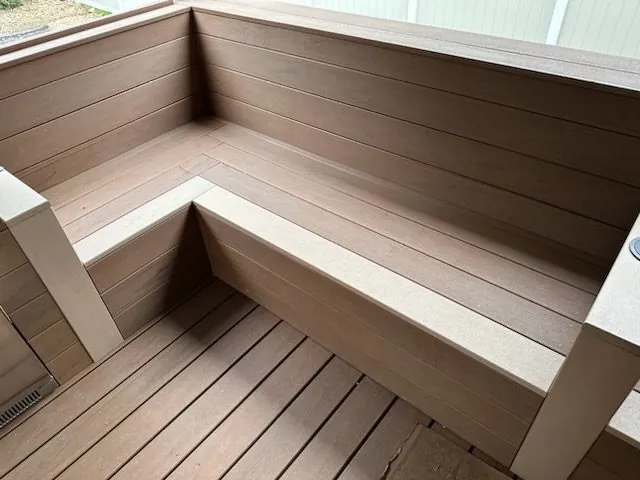
Trex Signature and the full Lineage line.
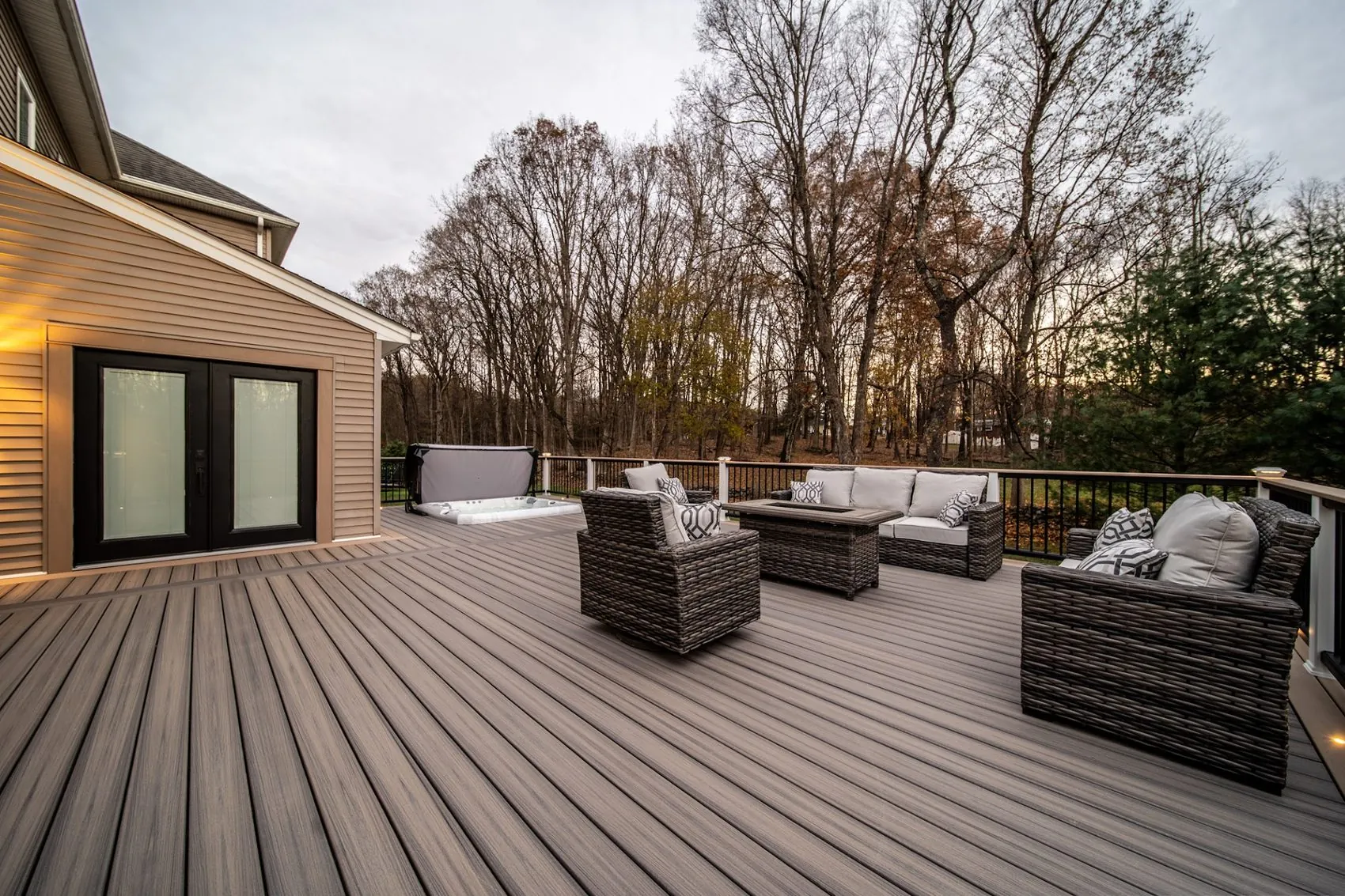
I build in Trex Signature, the top of the Trex range, and I offer the complete Trex Lineage collection. On the wide-open, sun-exposed decks common across Warwick and Goshen farm country, Lineage is the right call because it was engineered to stay cooler underfoot in direct sun. Signature gives me the deepest grain and color movement for the larger estate decks that look out over the rolling land. Both lines hold their color and never need the sanding and staining a wood deck demands.
Every project gets Haven LED lighting integrated into the steps, posts, and railing while the deck is being framed. On a big multi-level Orange deck that follows a rolling grade, that lighting makes the level changes safe to walk after dark and ties the whole outdoor space together when the sun drops behind the ridge.
Orange homeowners ask.
Can you build a deck on soft Warwick black dirt?
Yes, and soft soil is exactly where the foundation choice matters most. Warwick's black dirt is deep, organic, and a poor bearing surface, so a concrete footing set in it will slowly sink and pull the deck down with it. Helical piles solve this by driving down through the organic layer until they reach firm mineral soil and a verified torque value well below it. The pile carries its load on solid ground, not on the soft topsoil, so the deck stays level for the long run. On black dirt, piles are not an upgrade, they are the only foundation that works.
Do I need a permit to build a deck in Warwick or Goshen?
Yes. Warwick, Goshen, Middletown, and Cornwall all require a building permit with sealed structural drawings for a deck. Some sites also draw farmland, floodplain, or steep-slope reviews depending on where they sit. I handle the full submission for you, including the engineering, the helical foundation plan, and any extra reviews the property triggers. I have never had a permit denied. The engineering and the permits are always part of the build, never a separate line item I add on at the end.
My yard has rock in one spot and soft soil in another. Can one deck handle both?
It can, and that mixed ground is common in Orange. The advantage of helical piles is that each one is sized independently by the torque it reads as it installs. Where your lot has rock near the surface I bear the pile on the rock. Where the soil runs soft or deep a few feet over, I drive that pile down to firm bearing below the frost line. The result is a single deck supported by piles that may all reach different depths but every one of them is at full, verified capacity. That is something a row of identical concrete piers simply cannot do on uneven ground.
Can you build a large multi-level deck on a rolling lot?
Rolling lots are where multi-level decks shine, and Orange County is full of them. Instead of fighting the grade with a single tall platform, I step the deck down the slope in levels that follow the land, which keeps the structure close to the ground and the views open. Each level gets its own properly sized helical piles, so the whole thing sits solid even though it spans changing elevation. From there I can add a pool surround, an outdoor kitchen, a fire feature, and a covered section, all tied together by integrated lighting. The roll of the land becomes the design instead of the obstacle.